How to Visit the Argentinian Side of the Falls starts with understanding why this section of Iguazú National Park offers some of the most immersive views of the entire region.
Located in Puerto Iguazú, it’s an easy day trip from Foz do Iguaçu and a must-see for travelers who want closer, more dramatic encounters with the waterfalls.
This guide explains how to visit, what to expect, and the essential tips to make the most of this UNESCO Natural World Heritage site.
Iguazú National Park: a Little Bit of History
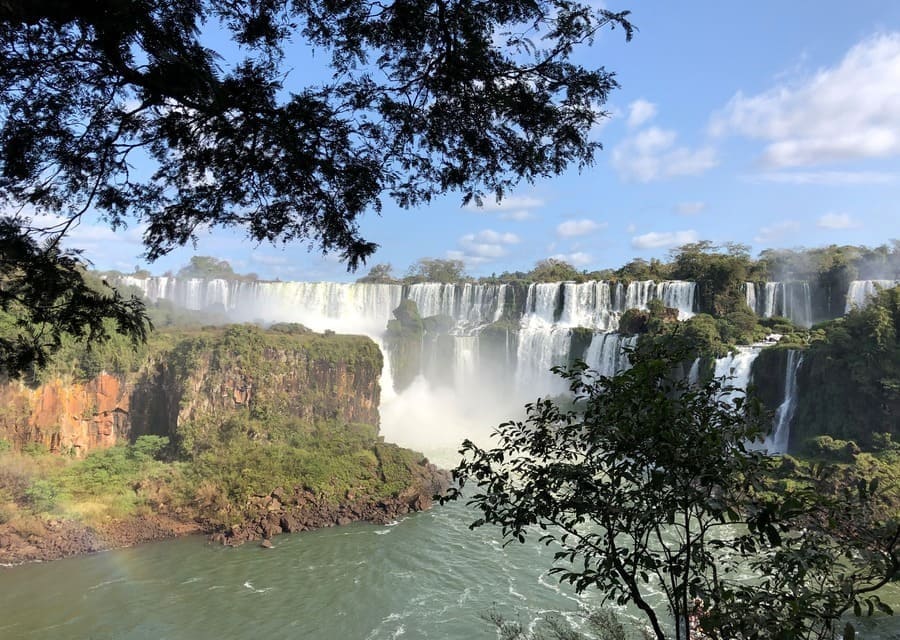
Before we dive into the tips for visiting the Argentinian side of the falls, it’s good to remember that what we casually call the Iguazu Falls is actually a huge system of 275 waterfalls along the Iguazú River, part of the Paraná River basin.
These magnificent falls stretch across two national parks: Iguaçu National Park (in Paraná, Brazil) and Iguazú National Park (in the province of Misiones, Argentina).
So yes… no matter how much friendly rivalry we have with los hermanos, we share this natural treasure with them!
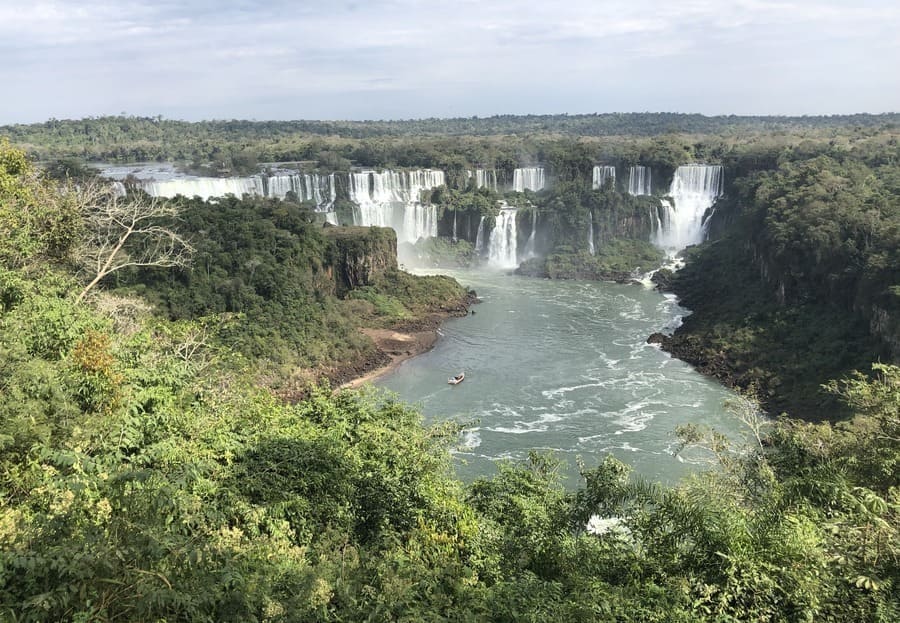
And just like the heated debates on the football field, here too each side has its bragging rights.
Beyond sharing this incredible natural wonder, both countries also share an important title: this subtropical forest that links Brazil and Argentina was declared a UNESCO Natural World Heritage Site.
And if you’re curious, Brazil did get the title first in 1984 – looks like we managed to jump ahead just a little, the same way we love to push forward on the football field. Two years later, the Argentinian side joined the celebration.
But jokes aside, what truly matters is that both parks share a deep commitment to protecting and preserving the extraordinary biodiversity that makes this region so special.
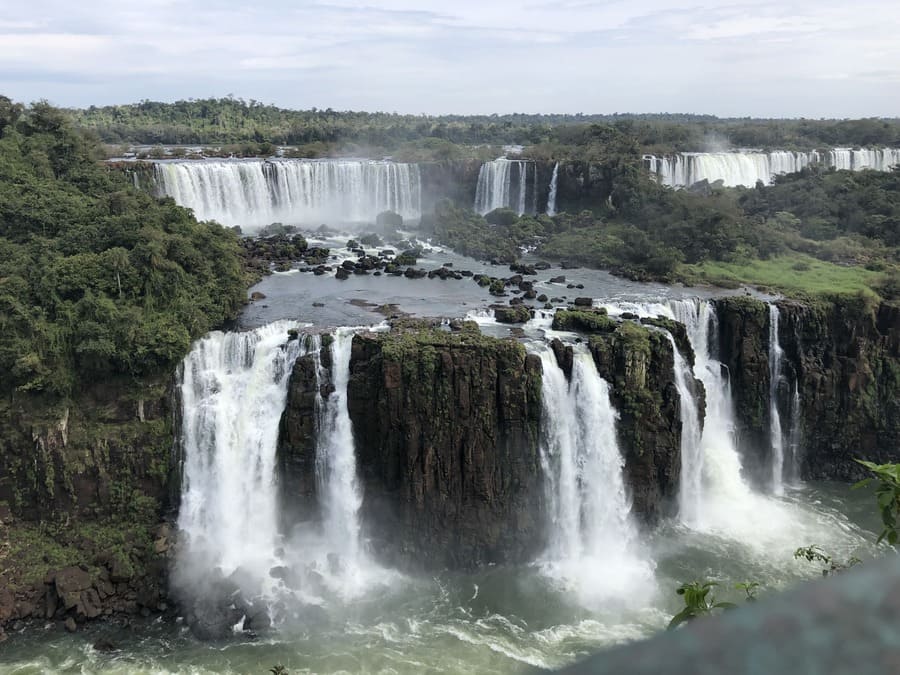
No matter which side of the border you’re standing on, the falls are simply breathtaking.
Another little curiosity: Argentina inaugurated Iguazú National Park back in 1934, and Brazil came right after, opening Iguaçu National Park five years later.
Fast-forward to 2011, and the Iguaçu/Iguazú Falls (call them whichever name your heart prefers) were officially named one of the New 7 Natural Wonders of the World.
If that isn’t a perfect excuse to pack your bags, I don’t know what is!
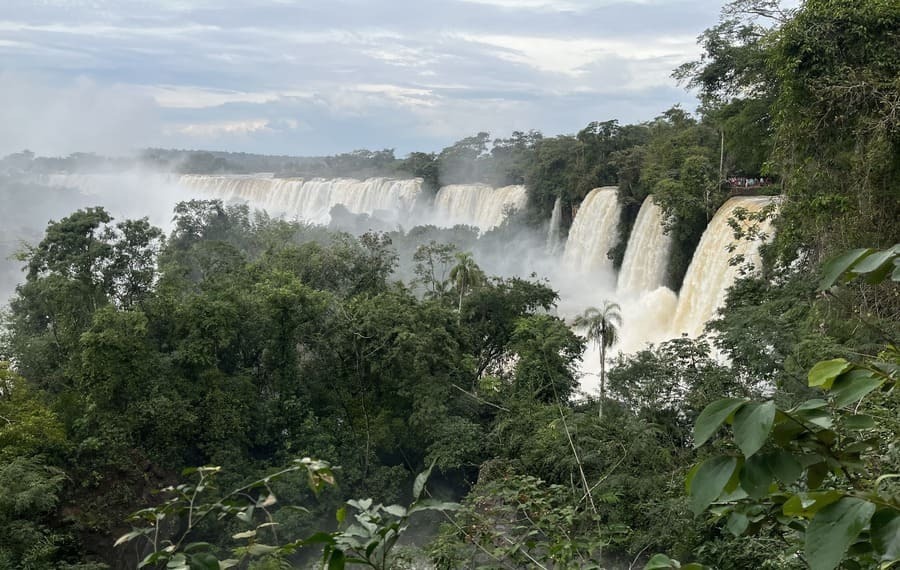
Iguazu Falls – Which Side Is Better: Brazil or Argentina?
I’ll give you a little spoiler right away: even though the Brazilian side wins in many aspects, I personally loved the Argentinian side more.
And here’s something really important: please don’t pick only one side. You’d miss out on an entire chapter of the experience, and both sides truly complete each other.
The two parks offer such different perspectives that skipping one means missing an entire chapter of the experience.
Honestly, each side reveals a unique, unforgettable piece of the falls.
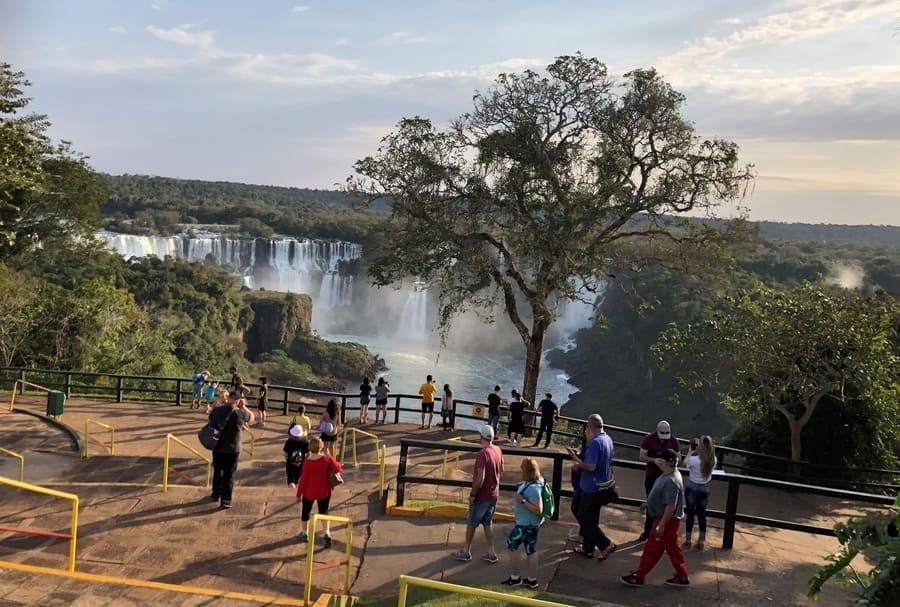
I’ve visited both parks on three different occasions, always in the same order: Brazilian side first, then the Argentinian side – which, for me, is the ideal sequence.
My first visit was in late spring (November 2017), when I went as a couple.
The second was in winter (August 2019), this time with my family.
And the most recent one was in autumn (June 2022), on a trip with three dear friends.
Seeing the falls across different seasons, and with such varied company, was truly fascinating and only confirmed how each side has its own charm.

Main Differences Between the Argentinian and Brazilian Sides
Even though they’re part of the same natural wonder, the Argentinian and Brazilian sides of Iguaçu Falls feel remarkably distinct.
Each park has its own personality, shaped by the way the trails are designed, how close you get to the waterfalls, and the overall rhythm of the visit.
One side invites you to observe the falls from sweeping panoramic viewpoints, while the other puts you right in the middle of the action, surrounded by walkways, selva, and the roar of the water.
These contrasts make the two parks beautifully complementary and visiting both is what truly reveals the full story of Iguaçu.
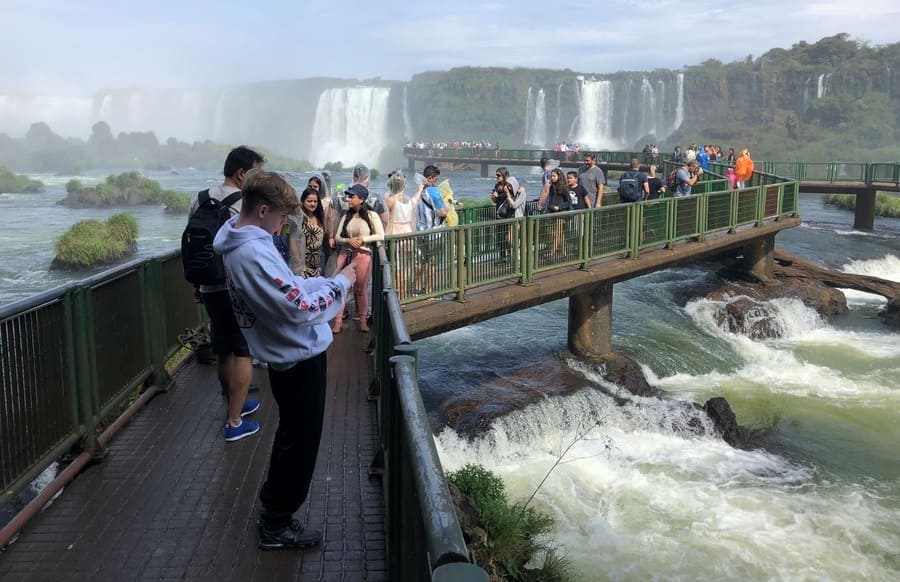
Infrastructure: What Changes From One Side to the Other
When it comes to infrastructure, the Brazilian side definitely wins. I wrote another post with all the details, but in short: Iguaçu National Park offers a much smoother, more comfortable visitor experience.
The shuttle bus that takes you from the entrance to the main viewpoint is a blessing — zero effort required.
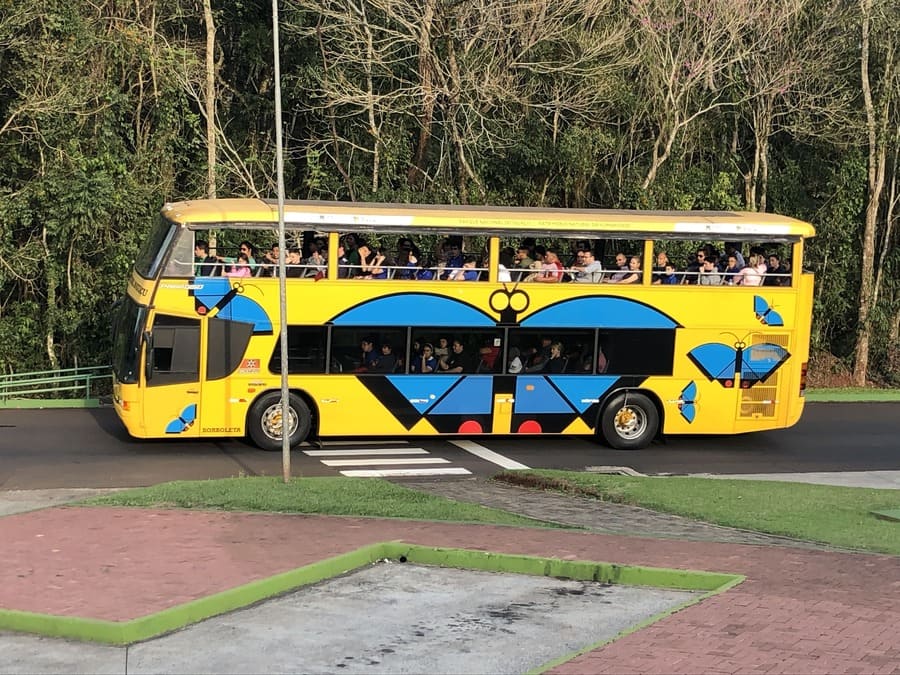
Accessibility is excellent as well. There’s even an elevator that leads you to the walkway with the most spectacular panoramic view of the falls.
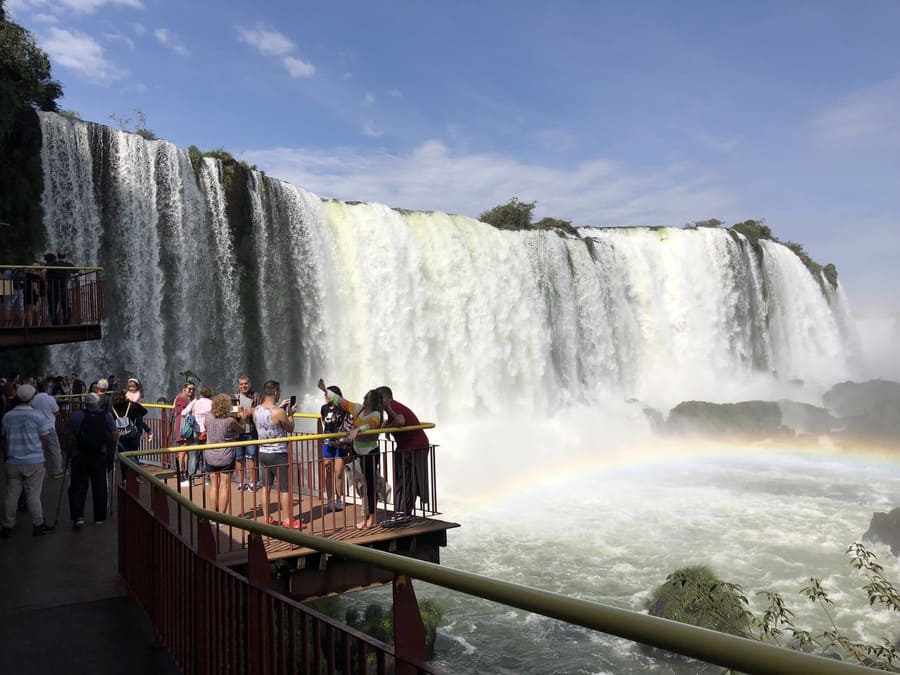
The entire trail is paved, practically flat, and very easy to walk.

The Argentinian side, on the other hand, has a more rustic setup.
The trails involve more walking, more stairs, and more variation in terrain, and the experience feels closer to the selva itself.
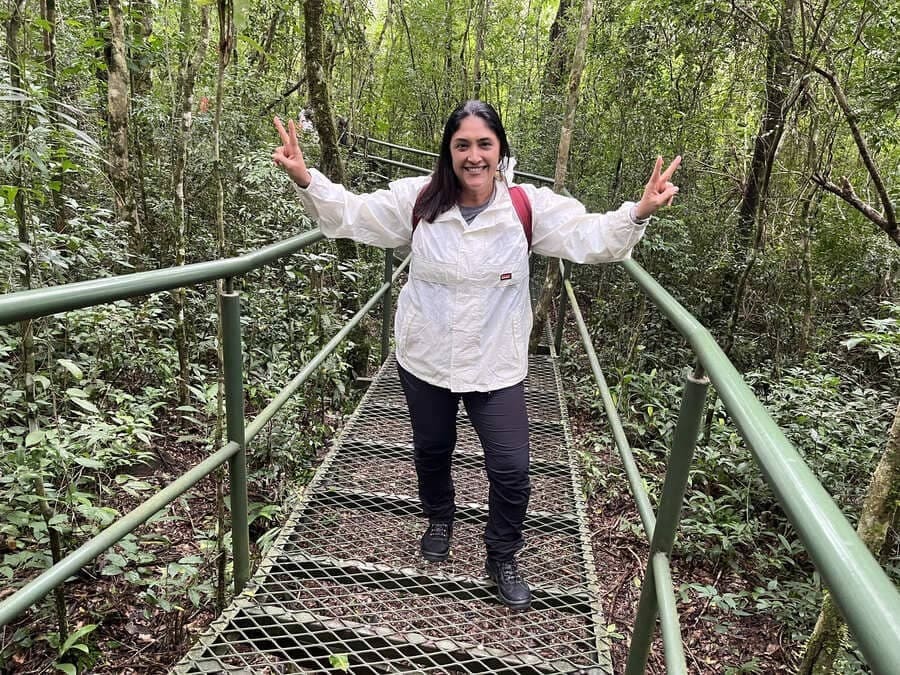
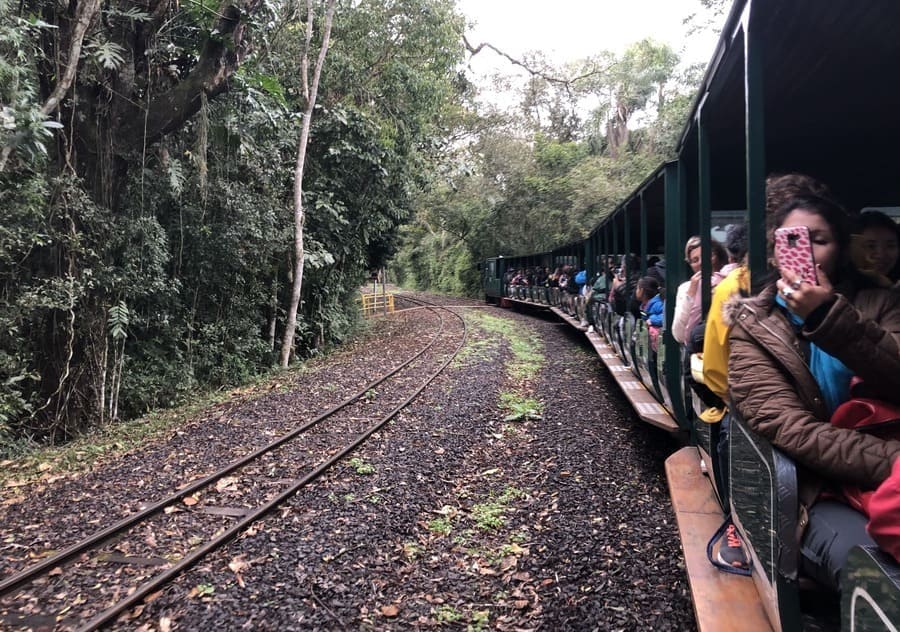
Instead of buses, you move around with the Ecological Jungle Train, which is charming but slower and less direct.
Facilities are simpler too, especially once you leave the main visitor center and head into the circuits.
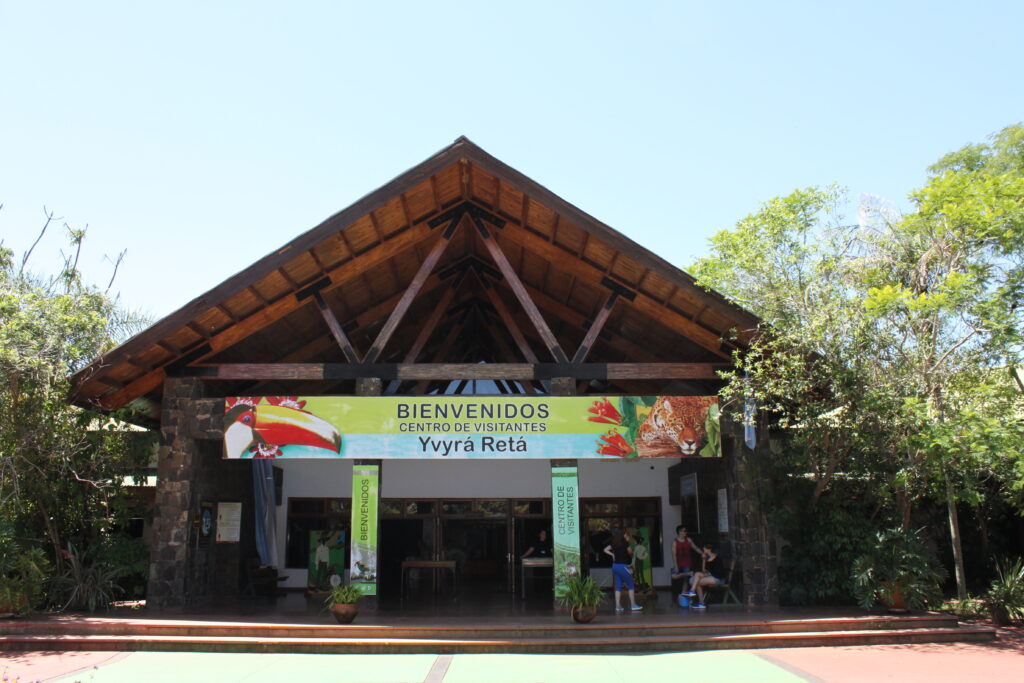
In short, if comfort and easy access are priorities, the Brazilian side delivers that beautifully.
But if you enjoy a bit more adventure and don’t mind longer walks or uneven paths, the Argentinian side rewards you with immersive views and a stronger sense of being “inside” the falls.
Together, the two parks balance each other perfectly: one offering convenience, the other offering depth.
Ecotourism at Iguazu Falls: Brazil vs. Argentina
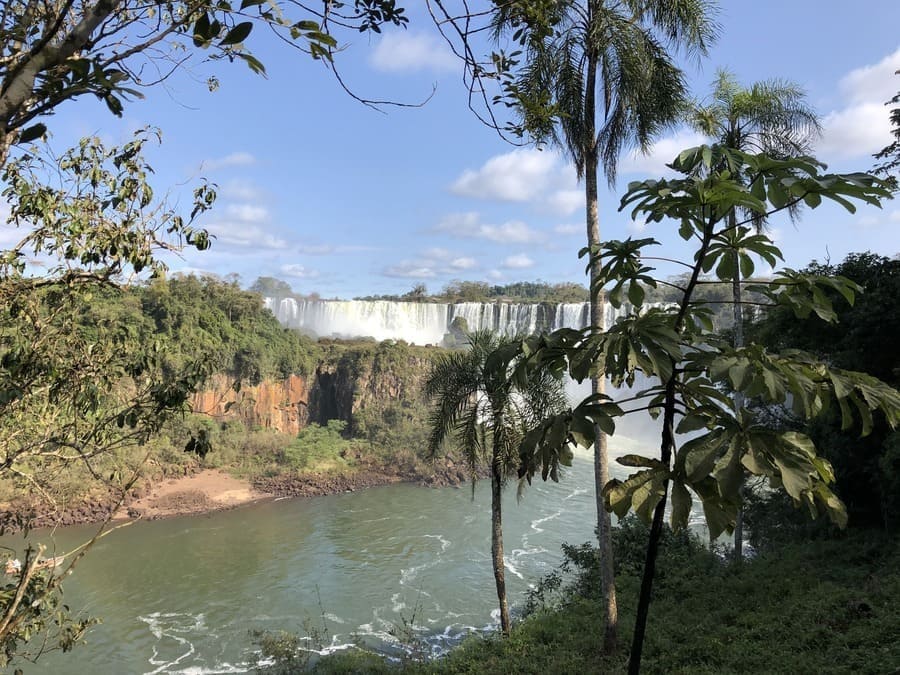
While the Brazilian side stands out for its comfort and accessibility, the Argentinian side of the falls delivers a completely different vibe.
The experience there is more rugged – more jungle, more nature, more adventure. And you get all of that without paying anything extra.

The trails require more walking and have more variation in terrain, but that’s exactly what makes the visit feel so immersive. It’s the kind of place where you’re not just observing the falls; you’re surrounded by them.
On the Brazilian side, all additional trails require separate payment (with the exception of the main panoramic trail), whereas in Argentina the three main circuits are included in the ticket.
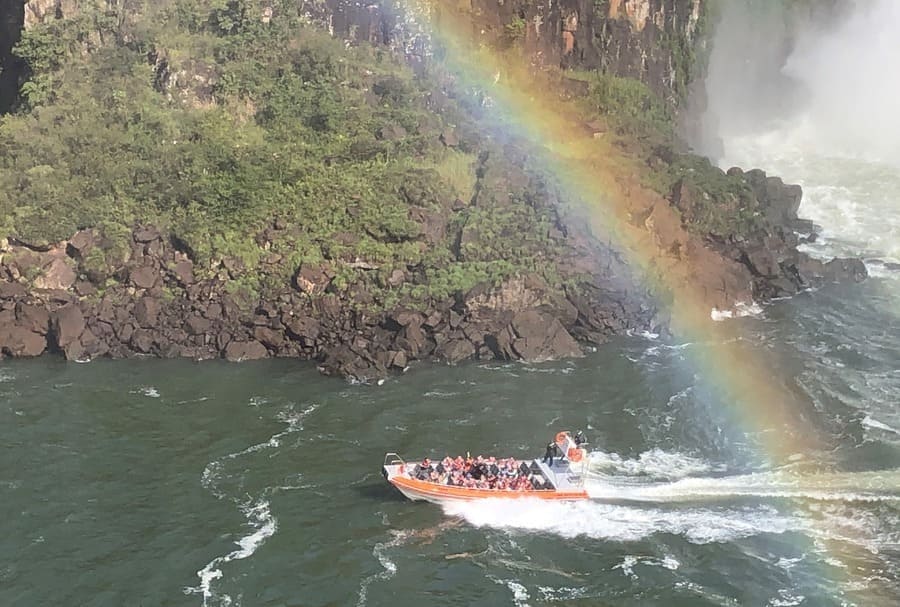
Both parks offer boat tours that take you right up close to the falls, but I’ve only done the Macuco Safari on the Brazilian side. The Náutico/Grand Aventura Tour in Argentina is still on my list for next time!
In the end, the infrastructure differences reflect the personality of each park: Brazil offers convenience and ease, while Argentina leans into a more adventurous, nature-driven experience.
Together, they balance each other perfectly.
Top Attractions on the Argentinian Side of the Falls
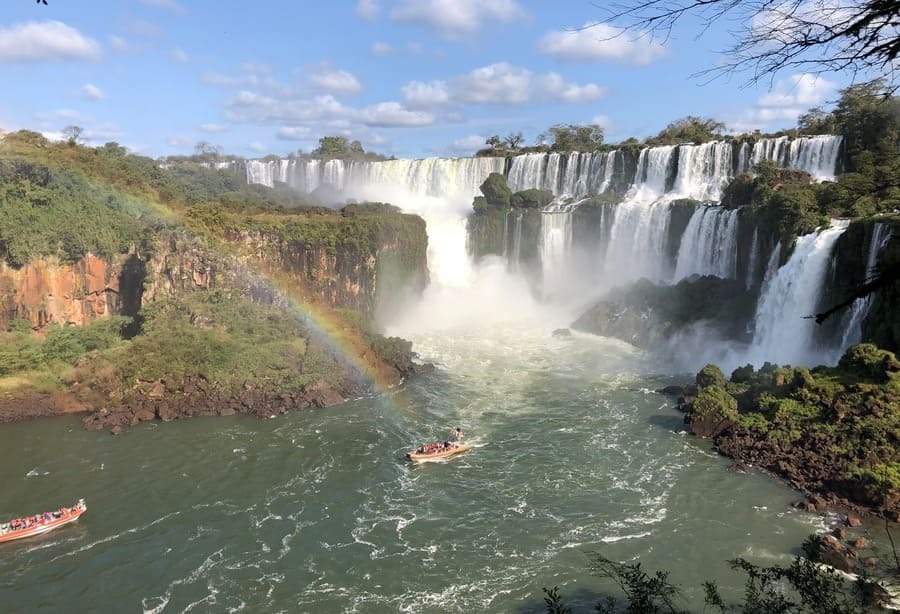
Spread across 67,720 hectares of protected subtropical forest, Iguazú National Park offers a variety of ways to explore the falls.
But the real highlights are the four experiences that shape any visit to the Argentinian side: the Upper Circuit, the Lower Circuit, the Devil’s Throat Circuit, and the Ecological Jungle Train.
Each one reveals a different angle of the waterfalls, from sweeping panoramic views to powerful close-ups, making it easy to understand why this side feels so immersive and unforgettable.
Upper Circuit
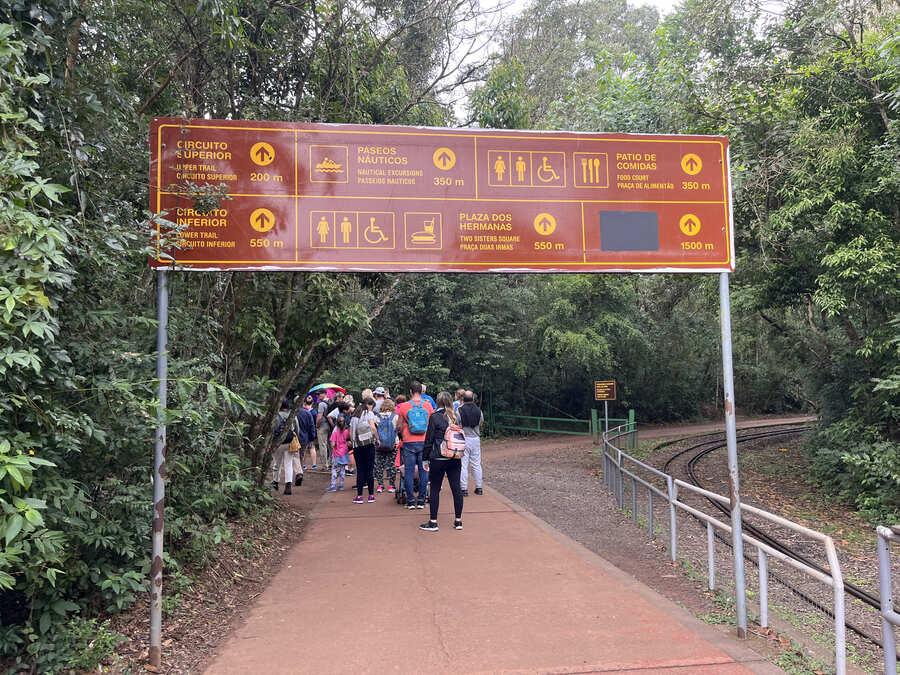
Located about 300 meters from the Cataratas train station, the Upper Circuit stretches for 1.7 km round-trip.
As the name suggests, this circuit offers top-down views of the Argentinian waterfalls. It’s an easy trail – flat, comfortable, and stair-free.
Throughout the walk, you’re surrounded by lush forest, vibrant greenery, and plenty of birdlife. It’s impossible not to stop every few minutes just to take it all in.
Lower Circuit
This entrance sits about 500 meters from the same train station, but this trail is a bit more demanding, with some areas of elevation.
In return, the views are simply stunning!
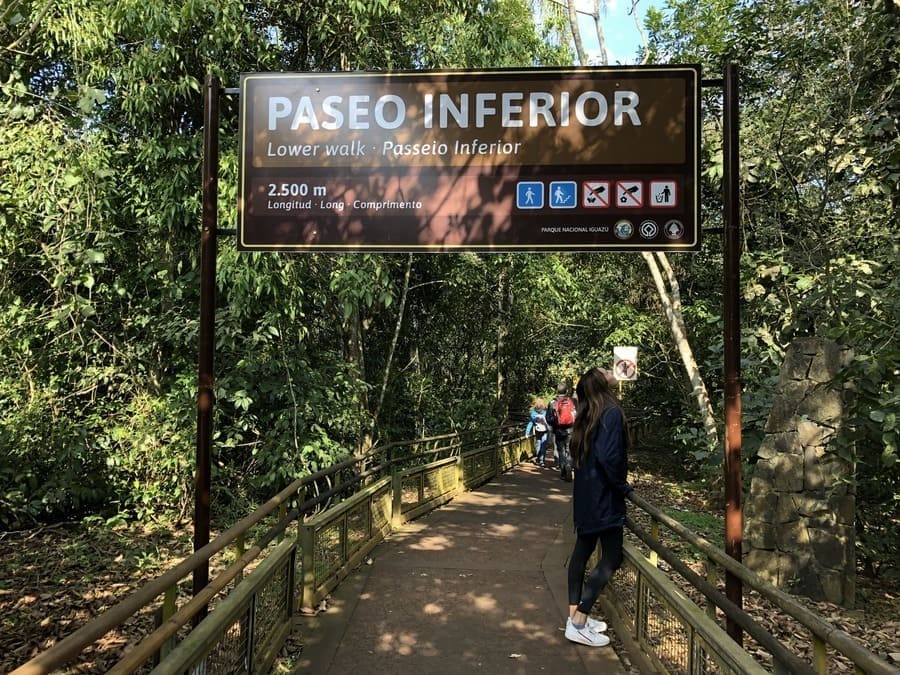
This circuit takes you right to the base of the waterfalls, where you can feel the raw power and abundance of the water.
It’s also from the Lower Circuit that you board the boat for the Náutico or Grand Aventura tours.
Devil’s Throat Circuit
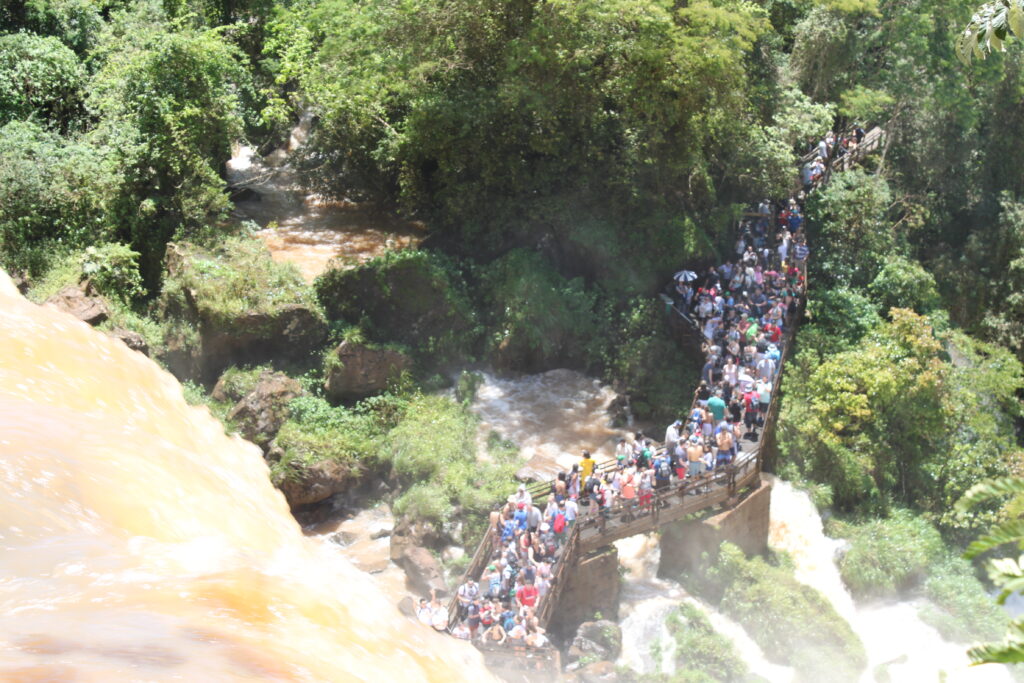
The most distant from the visitor center and the longest walk (2.2 km round-trip), the Devil’s Throat Circuit is also the most dramatic.
Most of the trail is on elevated walkways over the Iguazú River — surreal, safe, and endlessly scenic. Sometimes you even catch a rainbow along the way.
At the end of the circuit, a massive platform opens right above the Devil’s Throat, the most powerful and iconic waterfall of the entire park.
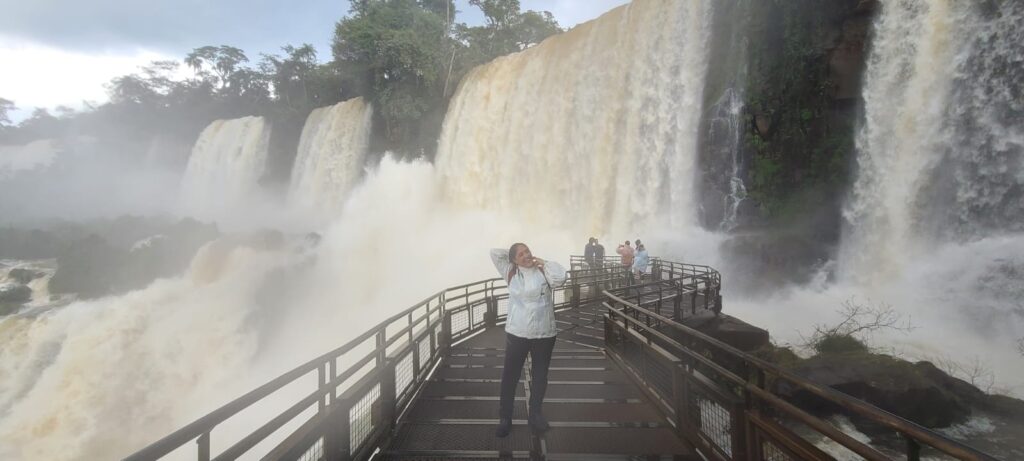
It’s an experience that stays with you forever.
Fun fact: on my first visit, the water levels were so high that I ended up completely soaked. Even with a GoPro, every photo came out beautifully distorted.
On my second time, during the “drier” season, I dressed for a full jungle shower… and barely caught a splash. That’s how unpredictable the falls can be.
If you want to see them at their most powerful, the warmer months (December and January) are your best bet.

Ecological Jungle Train
The Jungle Train is the official transport system inside Argentinian park.
It runs every 30 minutes and connects three main stations: the park entrance, Cataratas Station, and the final stop at Devil’s Throat.
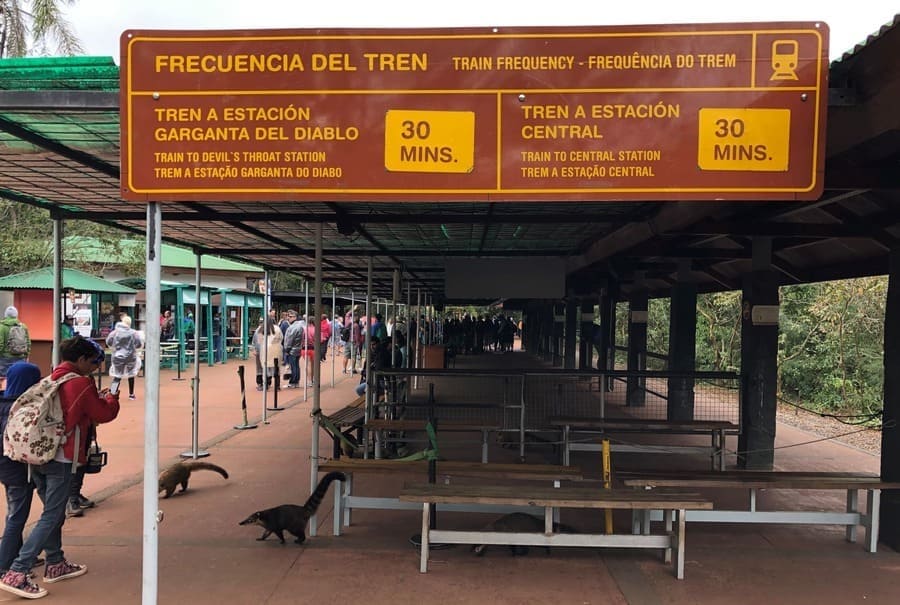
From Cataratas Station, you can easily access both the Upper and Lower Circuits, making it the central hub for most visitors.
How to Plan a Visit to the Argentinian Side of the Falls?
First things first: set aside a full day. Even though the Argentinian park is smaller in area, it offers far more trails than the Brazilian side, so the visit naturally takes longer.
Travel time is also a bit extended, which is why starting early makes all the difference.
Payment tips
It’s always a good idea to bring some Argentine pesos, as small vendors and ticket booths may have trouble processing cards when the internet signal drops.
That said, credit and debit cards do work in the park, just not consistently throughout the day.
Brazilian reais are also accepted in many places, but the exchange rate is rarely favorable for visitors, so you may end up paying more than necessary.
To avoid stress (and overpaying), carry enough pesos to cover your tickets, snacks, and any small purchases you plan to make during your visit.
Border crossing
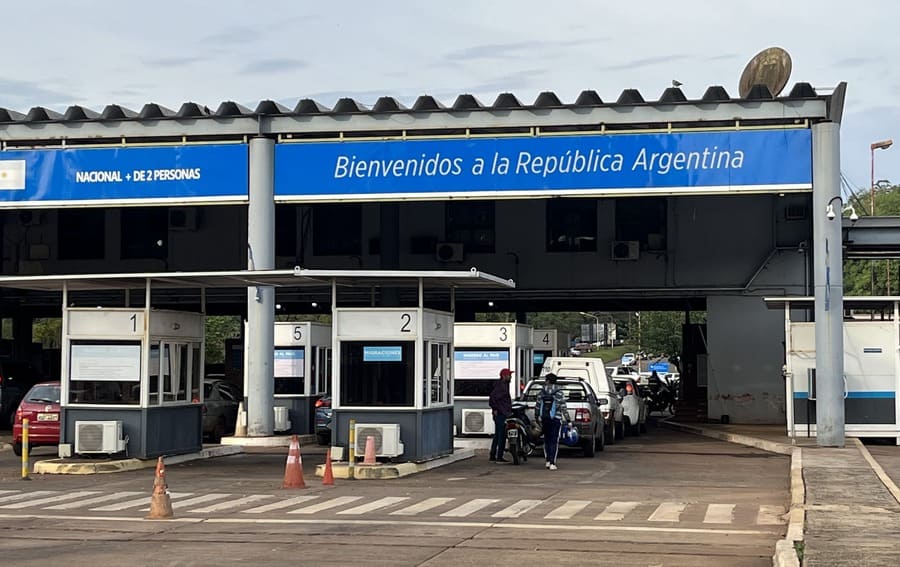
Foreign visitors must present a valid passport to enter Argentina.
During peak season and national holidays, border control can be slower due to the large number of tourists crossing the border.
That’s why starting early, or joining a guided tour that handles the logistics, can make the whole process much smoother.
How to Get to Iguazú National Park?
Iguazú National Park is located in Puerto Iguazú, just across the border from Brazil and about 25 km from downtown Foz do Iguaçu.
Getting there is part of the adventure: you cross an international border, drive through patches of forest, and slowly feel the scenery shift as you approach the Argentinian side of the falls.
There are several ways to reach the park and each option fits a different travel style. The most important tip is to start early, as arriving near opening time makes the entire process much smoother.
By car
Driving to the Argentinian side of the falls is a convenient option if you prefer flexibility.
The park offers a designated parking lot right at the main entrance, and there is an entrance fee to use it.
If you’re driving a rental car, make sure the agency allows cross-border travel and provides the required paperwork (most do, but it’s always best to confirm in advance).
Finally, keep in mind that both the border crossing and the parking area can get busy during peak season, so arriving early helps the whole process flow much more smoothly.
Public transportation
Taking public transport is an affordable option, but it does require a bit more time and patience.
International buses to Argentina leave from downtown Foz, next to the TTU terminal, and drop you off in Puerto Iguazú.
From there, you’ll need a second bus or a taxi to continue to the park entrance.
Buses accept only pesos, so make sure you have cash on hand before starting the journey.
It’s a perfectly doable route, but keep in mind that connections aren’t always perfectly timed. So allow extra time for waiting and border checks.
Taxi
If you prefer a more comfortable and straightforward option, taking a taxi can be a great choice.
You can negotiate directly with a driver, but booking through your hotel is usually the most reliable way to go.
I’ve arranged it on the spot once (and it worked out beautifully) but having everything sorted ahead of time gives you that extra peace of mind for a cross-border trip.
Tourist shuttles or vans
Many local companies offer round-trip transportation with hotel pick-up and drop-off, which makes the whole experience incredibly convenient.
On my second and third visits, I opted for a shuttle service, and it worked beautifully: comfortable ride, smooth border crossing, and helpful guidance throughout the day.
It’s an excellent choice if you prefer leaving the logistics to someone else so you can simply relax and enjoy the experience.
Buying tickets
You can buy tickets online through the park’s official website, and prices vary depending on nationality.
If you prefer buying your ticket on-site, make sure to bring pesos, as card machines may not always work reliably due to unstable internet inside the park.
Best Time to Visit the Argentinian Side of the Falls
The region has a tropical climate, which means rain is always a possibility, no matter the month.
From October to March, the weather is warm and humid, and the falls tend to be at their most powerful.
Between May and September, the days are cooler and drier, making the walks more comfortable.
I’ve visited the Argentinian falls in different seasons and enjoyed each one for its own reason.
The sheer volume of water in the hotter months is impressive, while the cooler, drier period offers clearer views and much more pleasant temperatures for exploring the trails.
How long should you stay?
Timing depends on how deeply you want to explore. On the Brazilian side of the falls, half a day is usually enough if you’re sticking to the main panoramic trail.
The Argentinian side requires more time. With three main circuits and plenty of viewpoints, a full day is the minimum – and even then, it can feel tight.
If you prefer a relaxed pace or want to add the boat tour, two days is ideal.
The park also offers progressive discounts with multi-day passes, such as the 3-day and 7-day Flexipass options, which can make extended visits more affordable.
Two Sides, One Unforgettable Experience
Visiting the Brazilian and Argentinian sides of Iguazu Falls is one of those rare travel experiences that stays with you long after you’ve left.
Each park reveals a different face of the falls – one more panoramic and structured, the other more immersive and adventurous -and together they create a trip that’s truly unforgettable.
If you’re excited to experience it all but would like help planning your itinerary, arranging transportation, choosing the best times to visit, and making sure everything flows smoothly, I’m here for you!
Turista FullTime Viagens creates personalized trips so you can enjoy every moment without worrying about logistics.
Just reach out – I’d love to help you plan this adventure!