If your cruise stop in Salvador (Bahia) lasts only a few hours, you’ll still have a great opportunity to explore one of Brazil’s most vibrant and culturally rich cities.
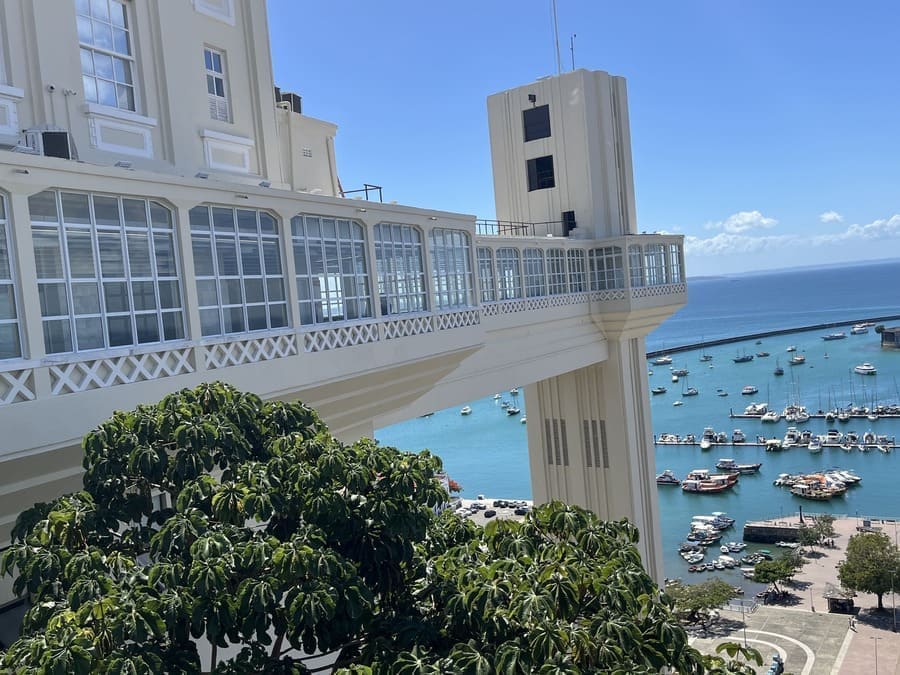
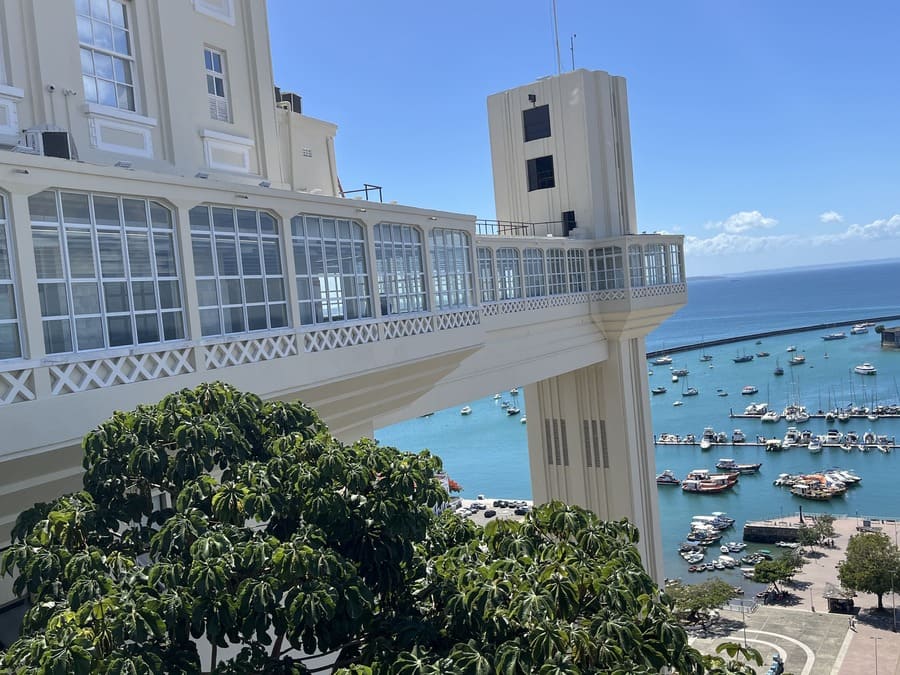
Wander through the historic streets of Pelourinho, visit the Mercado Modelo, take in the panoramic views from the Elevador Lacerda, and enjoy the bold, unforgettable flavors of Bahian cuisine.
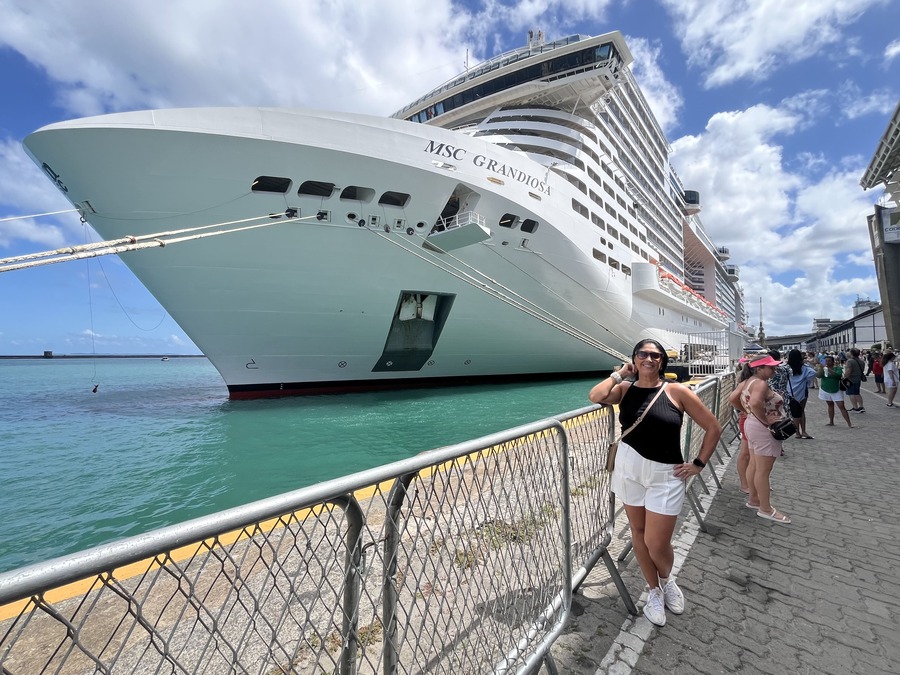
Some say Salvador is the “Capital of Joy,” thanks to its positive energy, its Axé.
Others claim it’s the “Land of Happiness,” because of its hospitality, music, and laid-back vibe.
I’d say both affectionate nicknames come together perfectly and are more than justified. What an impactful city!
I had visited Salvador many years ago and liked it a lot, but this brief cruise stop completely won my heart.
Salvador on the South America Cruise Route
Salvador is one of the most important cruise ports along the Brazilian coast and a major highlight during the South America cruise season, which typically runs from December to March.
You can start and end your cruise in Salvador, a very common option on seven-night itineraries.
Another possibility is to begin your cruise at a different port – such as Santos or Rio de Janeiro – and disembark in Salvador, taking advantage of the opportunity to spend a few extra days exploring the city.
Finally, your itinerary may include Salvador as a port of call, giving you just a few hours to discover this vibrant, historic destination.
In that case, having a practical itinerary with the best options is essential to make the most of your cruise stop.

Where do cruise ships dock in Salvador?
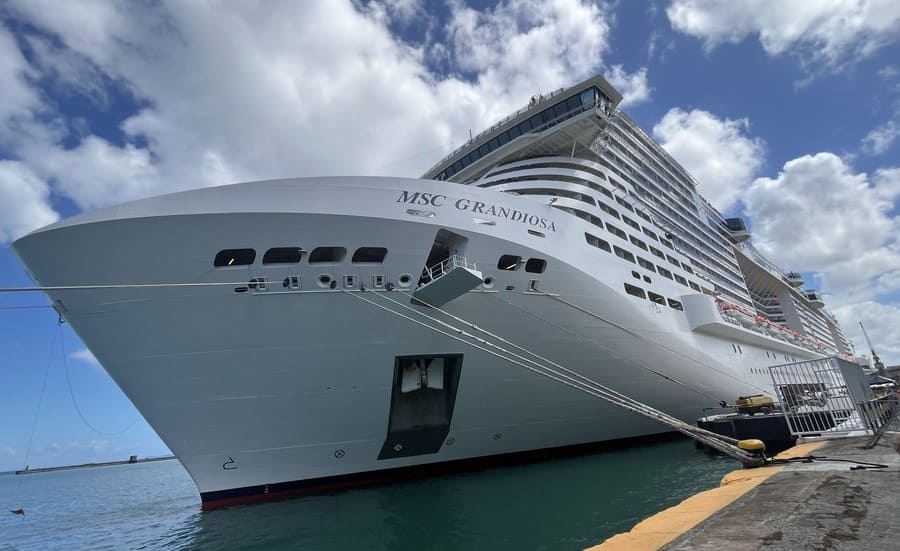
YSalvador has a large, modern cruise terminal with excellent facilities for passenger embarkation and disembarkation.
Honestly, one of the best I’ve seen in Brazil so far.
One of the port’s biggest advantages is its excellent location, making it easy to explore several of Salvador’s main attractions on your own.
You can start sightseeing right in the surrounding area. Sometimes without needing any transportation at all.
If you prefer visiting landmarks with a guide, tours can be arranged directly at the terminal.
Better yet, plan ahead so you don’t waste a single minute. Trust me: any time lost in Brazil’s first capital is time you’ll wish you had back later.
Things to Do in a Cruise Stop in Salvador
Cruise ships usually stay in Salvador for 8 to 10 hours, which is plenty of time to see the main highlights at a relaxed pace, but without overloading your day.
It’s best to avoid long-distance trips or very time-consuming visits, such as spending too long inside churches or museums.
On my stop, the ship arrived at 8:00 a.m. and departed at 6:00 p.m., which meant everyone had to be back on board by 5:00 p.m.
In those 8 hours, I managed to explore several spots in Salvador’s historic center.
I enjoyed the local cuisine and took time to slow down and relax. I even had an ice-cold beer under Salvador’s blazing summer sun!
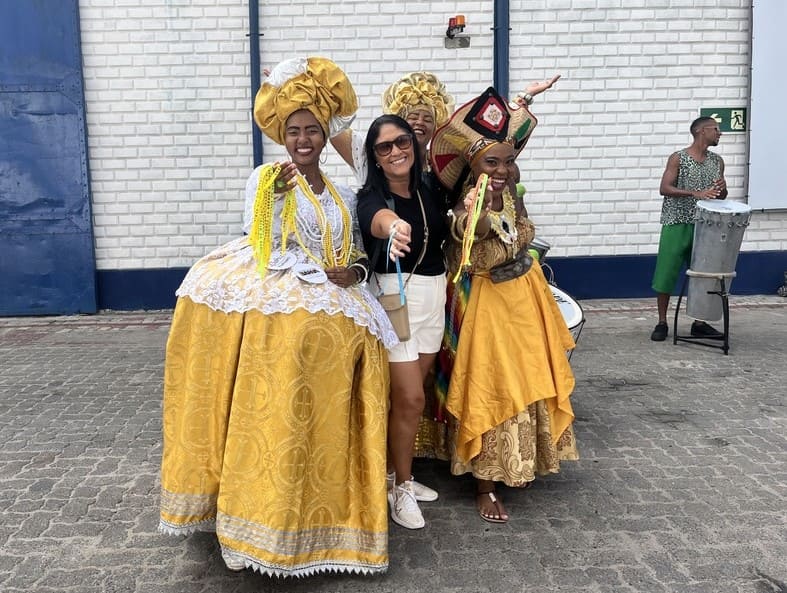
Kick Off Your Visit in the Lower City
Since the cruise terminal is located in the Lower City (Cidade Baixa), it makes sense to begin your visit there.
From the port, you can walk to the Mercado Modelo along a busy but flat avenue.
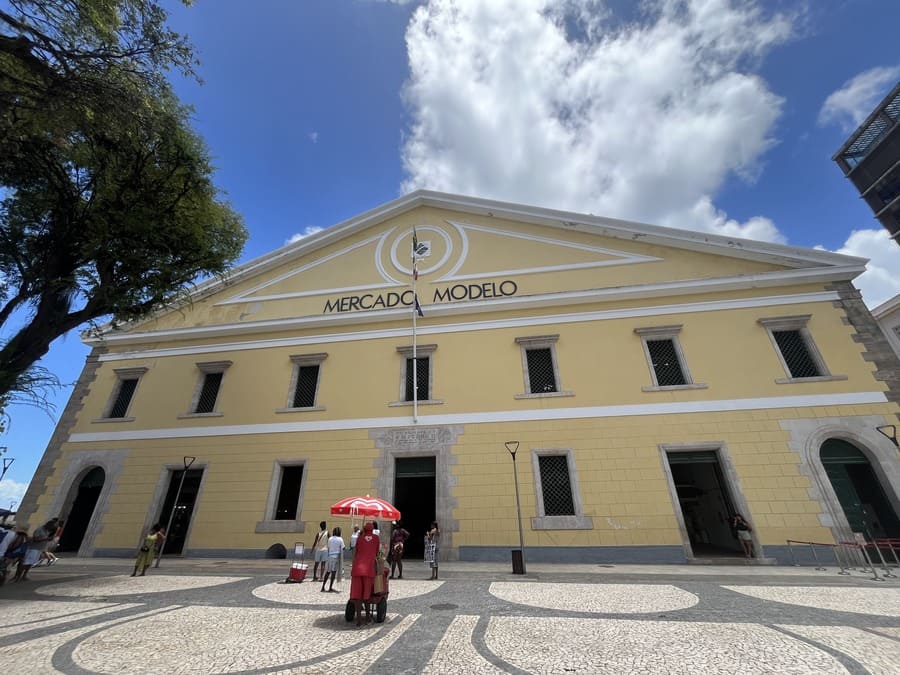
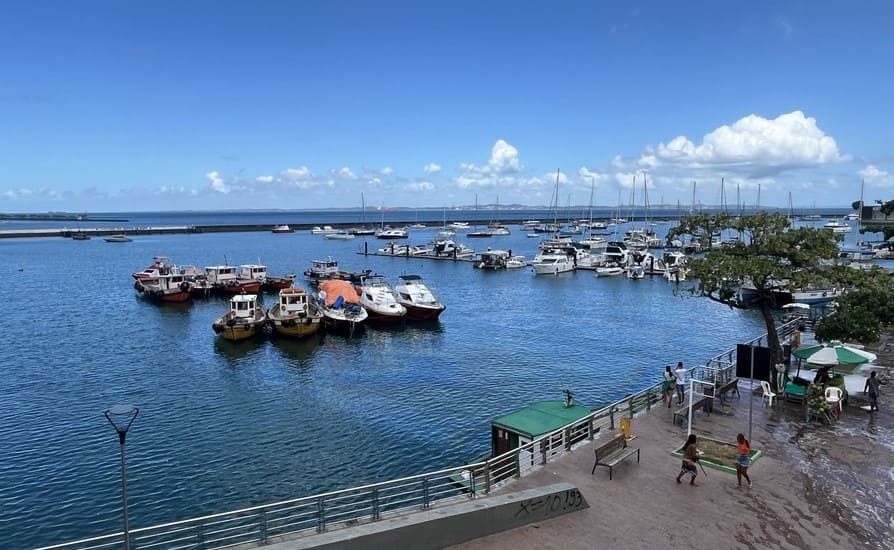
The walk takes about 20 minutes, and as you get closer, you’re rewarded with lovely views of the Bahia Nautical Tourism Terminal and the Bay of All Saints.
With more than 250 shops, the Mercado Modelo is a great place to browse local handicrafts, buy souvenirs, and sample traditional Bahian dishes.
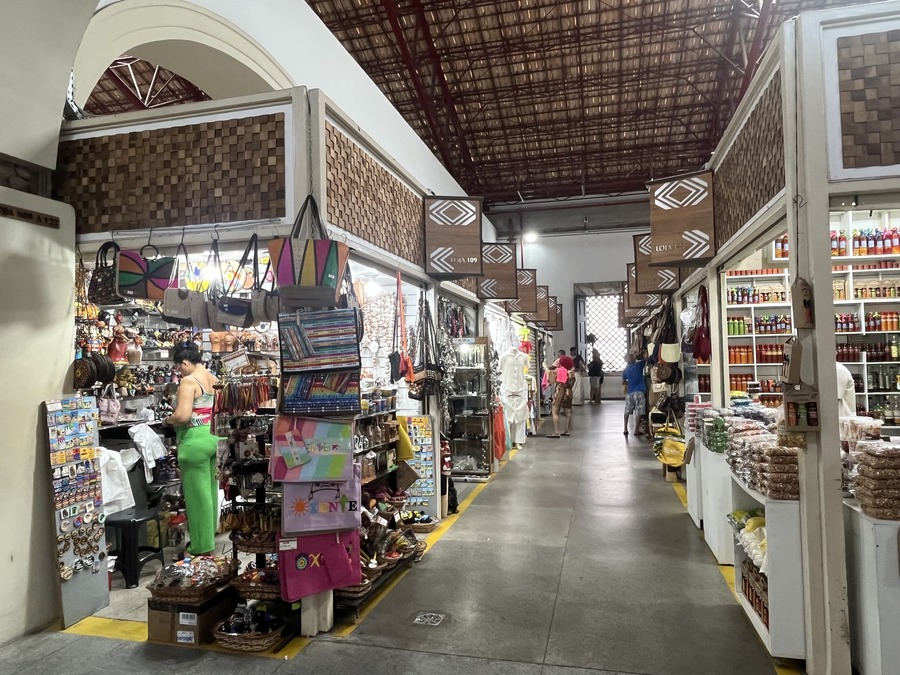
If you have extra time and interest, you can also stop by the Cidade da Música da Bahia before heading up to the Upper City.
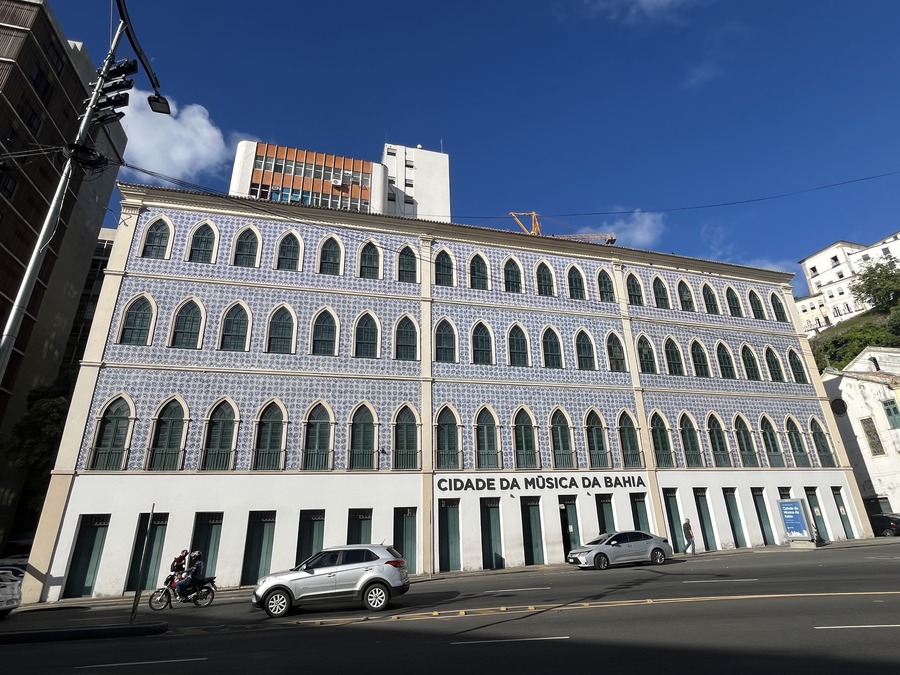
This interactive museum showcases the rich variety of Bahian music and its many rhythms, making it a fun and engaging stop along the way.
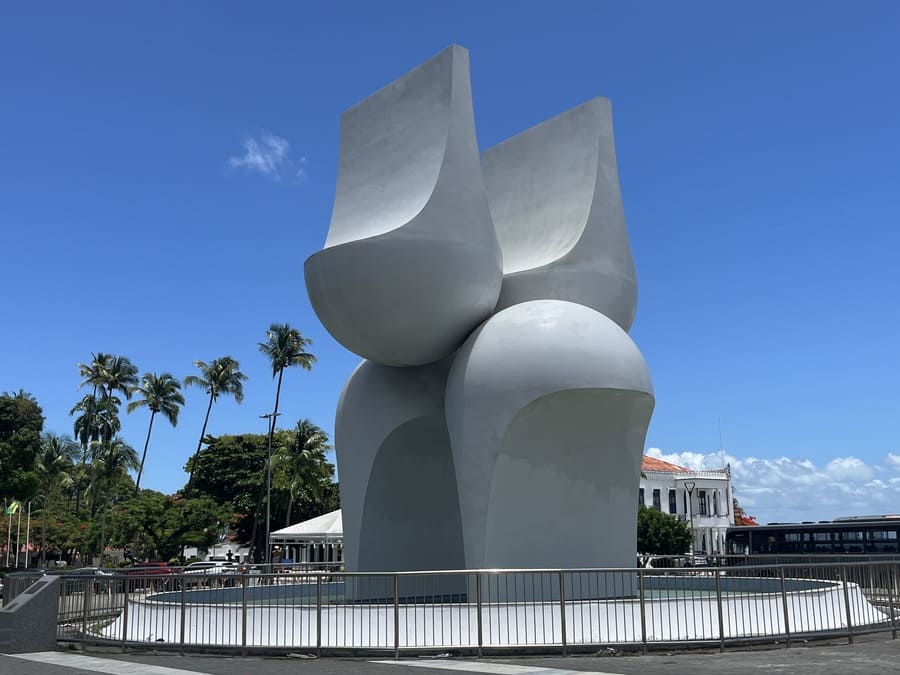
From Mercado Square, you can also see the Fountain at the Mercado Ramp, a massive monument created by the artist Mário Cravo Jr.
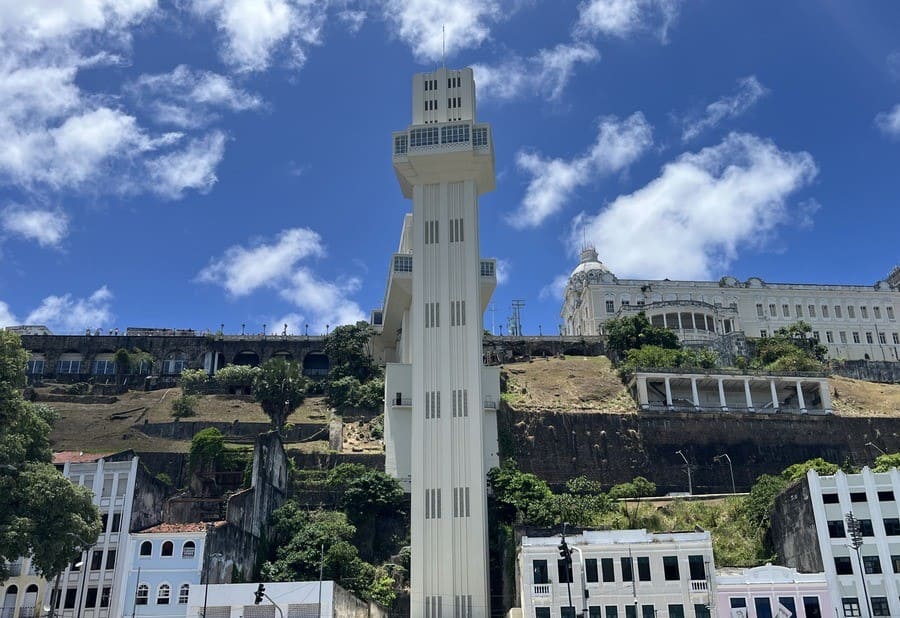
Once you’ve explored the attractions of the Lower City, simply cross the square to reach the Elevator Lacerda, which takes you up to the Upper City.
Discover the Upper City
The Upper City (Cidade Alta) is where you’ll find the heart and soul of Salvador.
This is where Pelourinho comes to life, with its colorful colonial mansions and cobblestone streets.
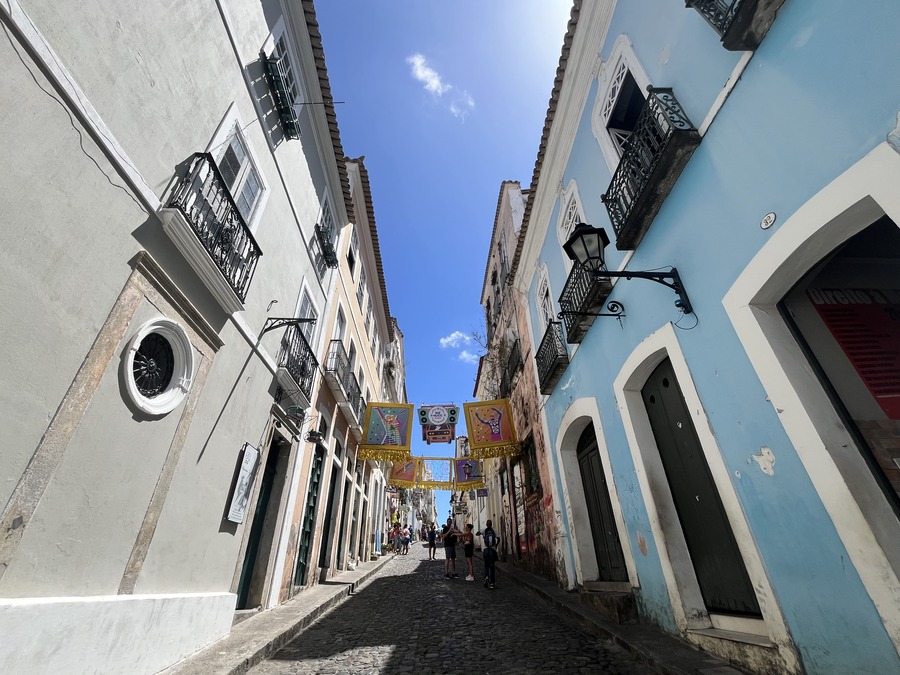
It’s also home to many of the city’s most important churches, museums, cultural expressions, and traditional restaurants – true hallmarks of Salvador.
Everything in Pelourinho is steeped in history. The area alone is well worth the visit, but with limited time, it’s important to prioritize.
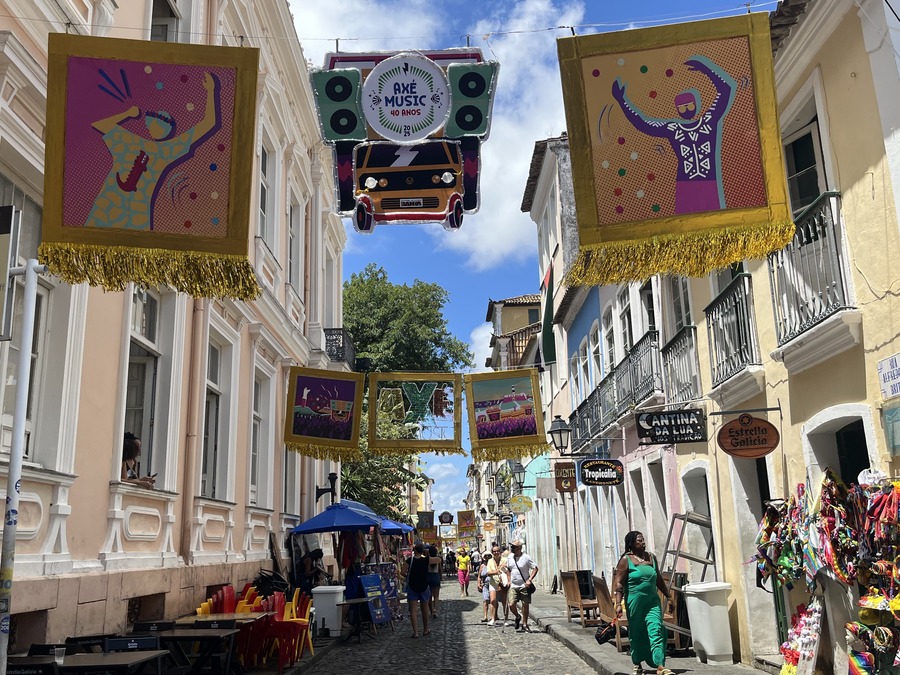
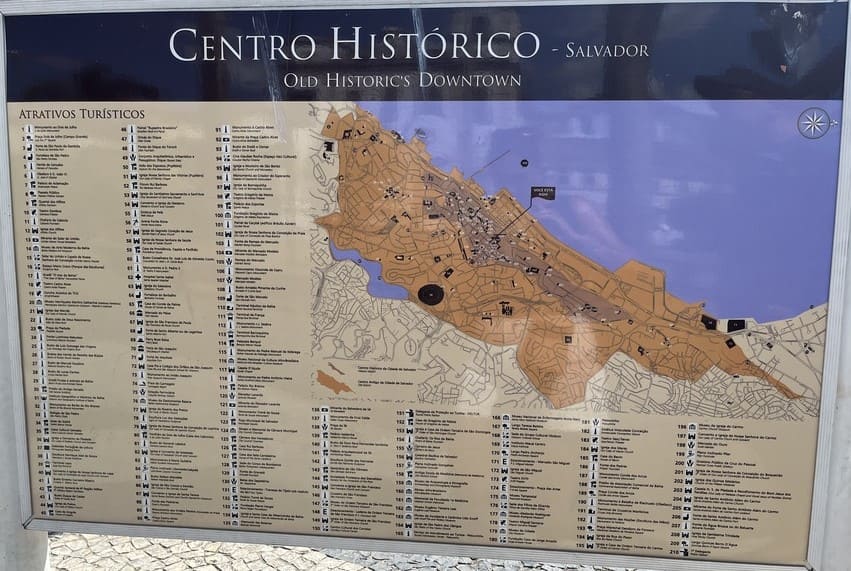
Just to give you an idea of how much there is to see, the Historic Center alone is home to more than 200 tourist attractions, including viewpoints, museums, chapels, monuments, and churches.
I really made the most of my time in Salvador. Still, there was one small thing that didn’t go as planned.
On the day my ship docked, the Elevador Lacerda wasn’t operating—I had pictured myself using it, but ended up with a plan B instead.
After 10 months under renovation, it reopened to the public just a week later. You can’t make this stuff up.
So, to reach the Upper City, I took the Plano Inclinado, which arrives very close to Terreiro de Jesus, one of Pelourinho’s main squares.
That worked out perfectly, as I was able to explore the attractions nearby.
Most likely, though, you’ll reach the Upper City via the Elevador Lacerda, which is the most common access point.
From there, you’ll do a bit of walking, but it’s still the ideal starting point for exploring the Historic Center and its highlights, including Pelourinho.
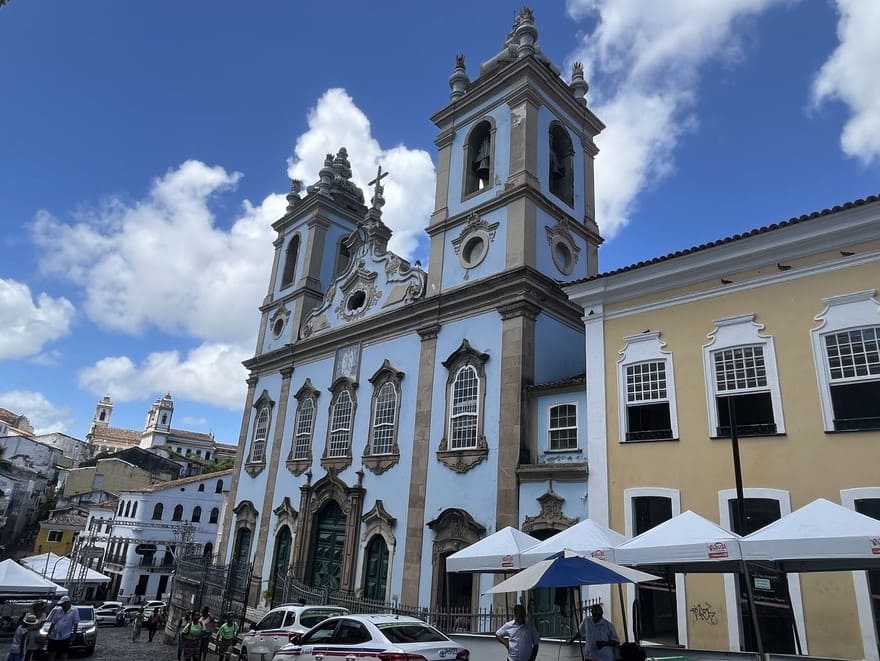
The Three Squares of Pelourinho
Pelourinho is home to three main open spaces, commonly referred to as squares:
- Largo do Pelourinho
- Largo Terreiro de Jesus
- Largo de São Francisco
Largo do Pelourinho is the most famous of the three.
Surrounded by historic colonial buildings and strong Afro-Brazilian cultural influences, it is also home to the Fundação Casa de Jorge Amado, a biographical museum dedicated to the Bahian writer Jorge Amado.
The square often hosts capoeira performances and percussion groups such as Olodum.
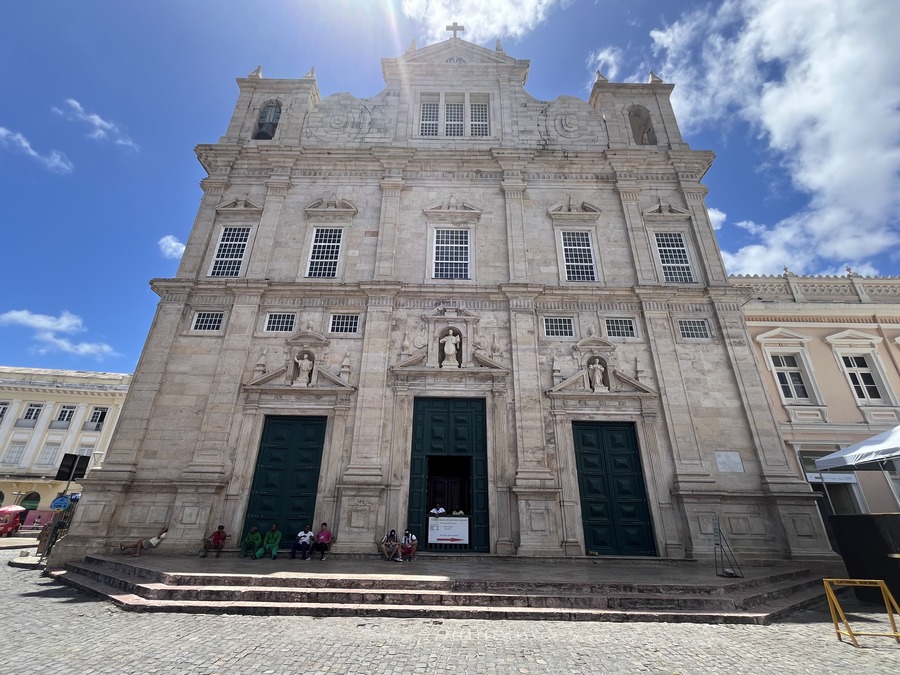
Largo Terreiro de Jesus is one of the liveliest areas in Pelourinho.
This is where you’ll find the Cathedral Basilica of Salvador and the Church of São Pedro dos Clérigos.
The square is also lined with traditional bars and restaurants, making it a great place to take a break.
Finally, Largo de São Francisco is one of the most photographed spots in Pelourinho, as it is home to the stunning Church and Convent of São Francisco, renowned for its richly decorated interior.
Getting Around Salvador
Like many large cities, Salvador faces traffic challenges, especially during rush hours.
For a cruise stop that lasts only a few hours, it’s best to avoid overambitious plans or attractions that require long commutes.
That said, if you’d like to visit places a bit farther away – such as Farol da Barra or the Church of Senhor do Bonfim – ride-hailing apps work well in Salvador.
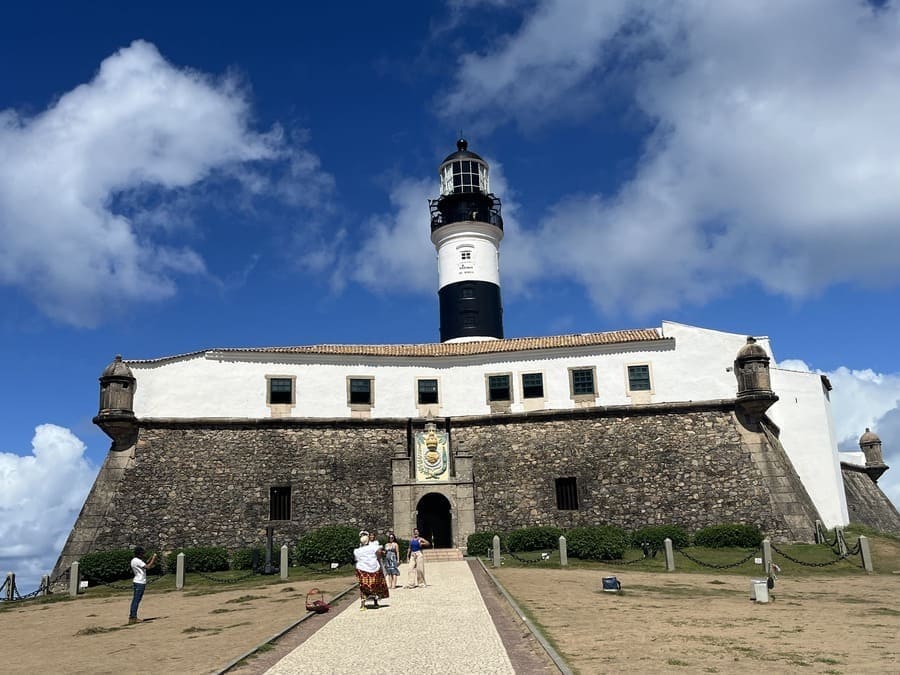
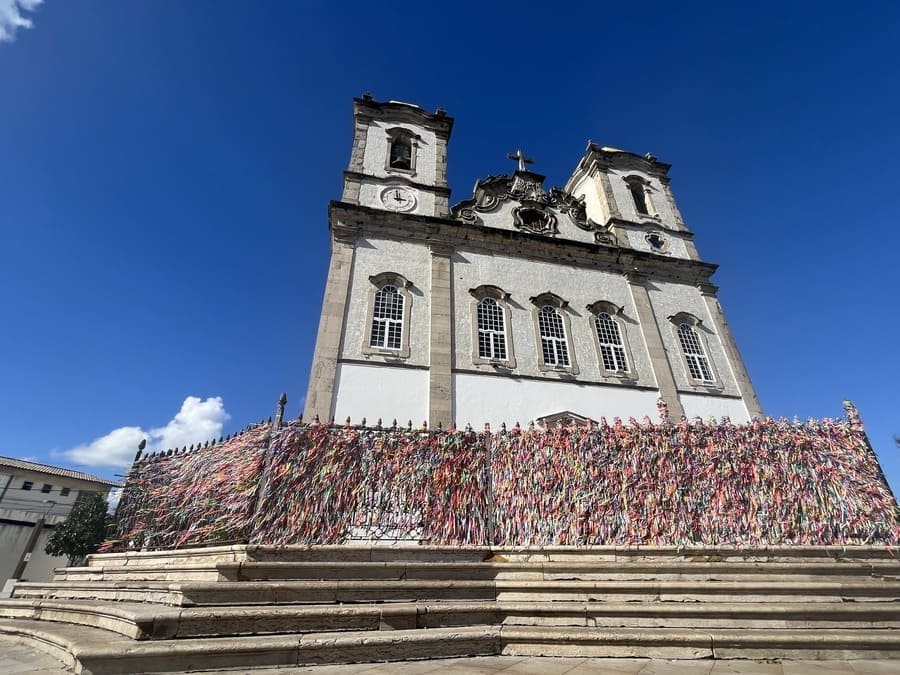
I didn’t use them myself, but several people I met on the cruise did and were happy with the experience.
I met a family who chose to walk from the Lower City to the Upper City, but I wouldn’t recommend it.
Even port staff advised sticking to busier areas, so avoid walking alone or through less visited neighborhoods.
If you don’t feel comfortable exploring Salvador on your own, consider moving around with others or joining a reputable tour.
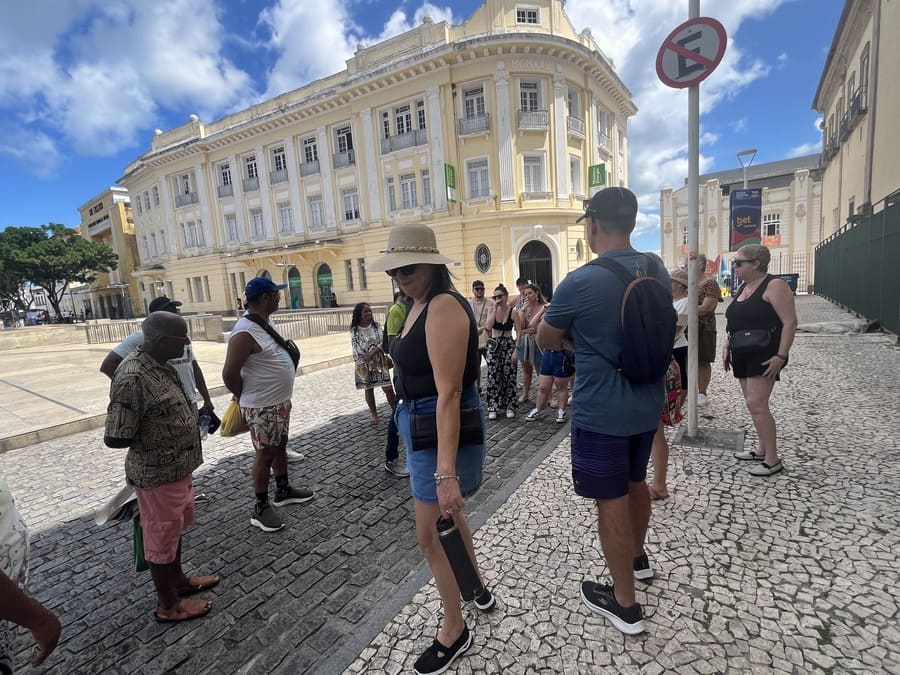
In my case, I relied on public transportation and did a lot of walking, both in the Upper City and the Lower City.
Since I knew there would be plenty to see around the Historic Center and near the port, I split my day between these two areas and it worked out perfectly.
There was no rush at all: I had time to explore the city’s highlights, enjoy the local cuisine, have a cold beer at a traditional bar, and even stop for a coffee before heading back to the ship.
Extra Tips to your Cruise Stop in Salvador
A few simple tips can make a big difference during your cruise stop in Salvador.
From staying comfortable and safe to managing your time wisely, these extra suggestions will help you enjoy the city with confidence and ease.
If you’d like personalized advice, you can also book a video call to plan your visit with a local and make the most of your time in the city.
Bring Some Cash
The official currency in Salvador is the Brazilian real (BRL). While credit cards are widely accepted in hotels, larger restaurants, and shops, many smaller businesses, street vendors, and traditional eateries still operate on a cash-only basis.
It’s a good idea to carry some cash with you. ATMs are available throughout the city, especially in central areas.
Be Prepared for the Heat
Salvador is hot and humid for most of the year. The warmest months run from December to March, when temperatures usually range between 26°C and 32°C (79°F to 90°F) and the real feel is often higher.
Lightweight clothing, sunscreen, a hat, and plenty of water will make your day much more comfortable.
Wear Comfortable Shoes
Cobblestone streets, uneven sidewalks, and lots of walking, especially in the Historic Center, are part of the experience.
Comfortable, closed-toe shoes with good grip will save your feet.
Plan with Distance in Mind
Traffic in Salvador can be heavy, particularly during rush hours.
If you’re visiting the city on a cruise stop, focus on attractions close to the port and avoid long commutes unless you’re using organized transportation.
Stay in Lively Areas
Stick to busy, well-trafficked areas, especially if you’re exploring on your own.
When in doubt, walk with others or consider a guided tour – it’s an easy way to enjoy the city with peace of mind.
Take care of your valuables
Pay close attention to backpacks, purses, and mobile phones, especially in crowded or touristy areas.
Even though tourist areas are generally well policed, it’s still important to keep bags zipped and, whenever possible, worn in front of your body.
Avoid using your phone carelessly on busy streets – simple precautions like these go a long way in preventing pickpocketing.
Embrace the Local Rhythm
Salvador moves at its own pace. Leave room in your schedule to sit down, enjoy the food, listen to music, and soak up the atmosphere – that’s where the city truly shines.
Pay attention to timing
Cruise schedules are strict. Plan your day with buffer time to return to the ship calmly and without rushing.
Cruise Stop in Salvador: Is It Worth It?
Honestly, despite having visited dozens of ports around the world, Salvador now sits at the very top of my list.
This UNESCO-listed city, known for its colorful colonial buildings, cobbled streets, and vibrant local vibe, is the kind of place that stays with you long after you leave.
Needless to say, I arrived with high expectations, and they were quickly exceeded from the moment I stepped off the ship, only growing stronger as I explored the city.
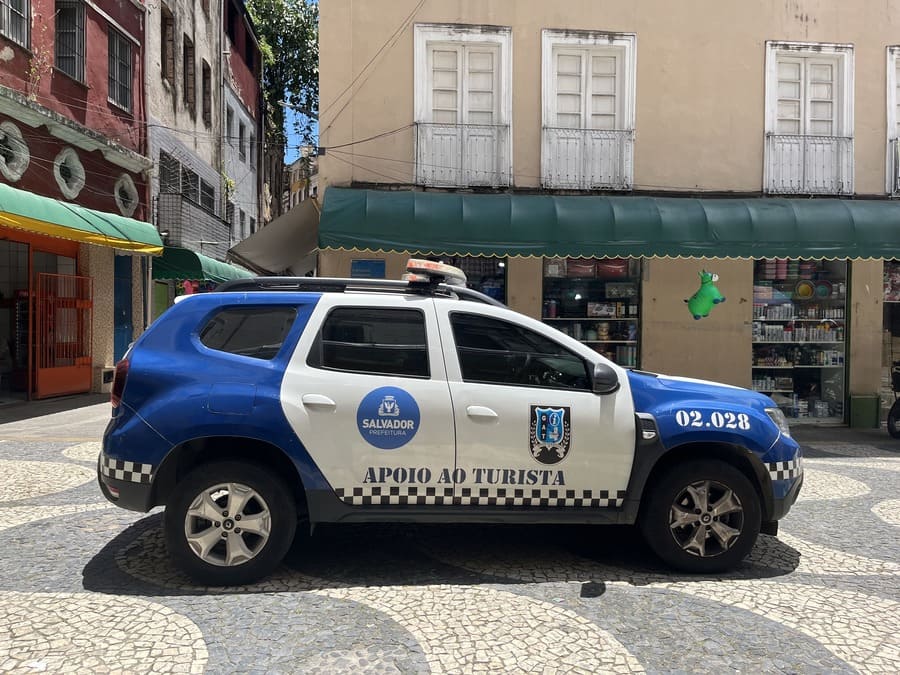
I found Salvador extremely well prepared to welcome visitors: safe, well-policed, organized, and clean.
People often mention the pushiness of street vendors offering Senhor do Bonfim ribbons and souvenirs. To be fair, that wasn’t my experience.
Yes, vendors did offer their products and services, but once I declined, they politely moved on to other tourists.
Food and drink prices in Pelourinho were a bit on the expensive side. However, prices at the Mercado Modelo were quite reasonable. Even at the traditional Camafeu de Oxossi, where I tried delicious mini acarajés and crab shells, all with a stunning view of the Bay of All Saints.
I have to confess: the experience was so impactful that the week I got back home, I booked flights to visit Salvador again, this time for an entire week.
Stay tuned for the next chapter – Salvador is far from done with me.
Plan Your Cruise with Turista FullTime
If you enjoyed this cruise stop in Salvador—or if you’re planning a visit to the city—I’d be happy to help you organize your itinerary and plan your trip.
Through Turista FullTime Trips I can assist you with car rentals, travel insurance, flight tickets, accommodations, transfers, tours, attraction tickets, and everything else you need to create your dream cruise experience.
Visit the Turista FullTime Viagens page and let me help you plan every detail of your cruise journey.